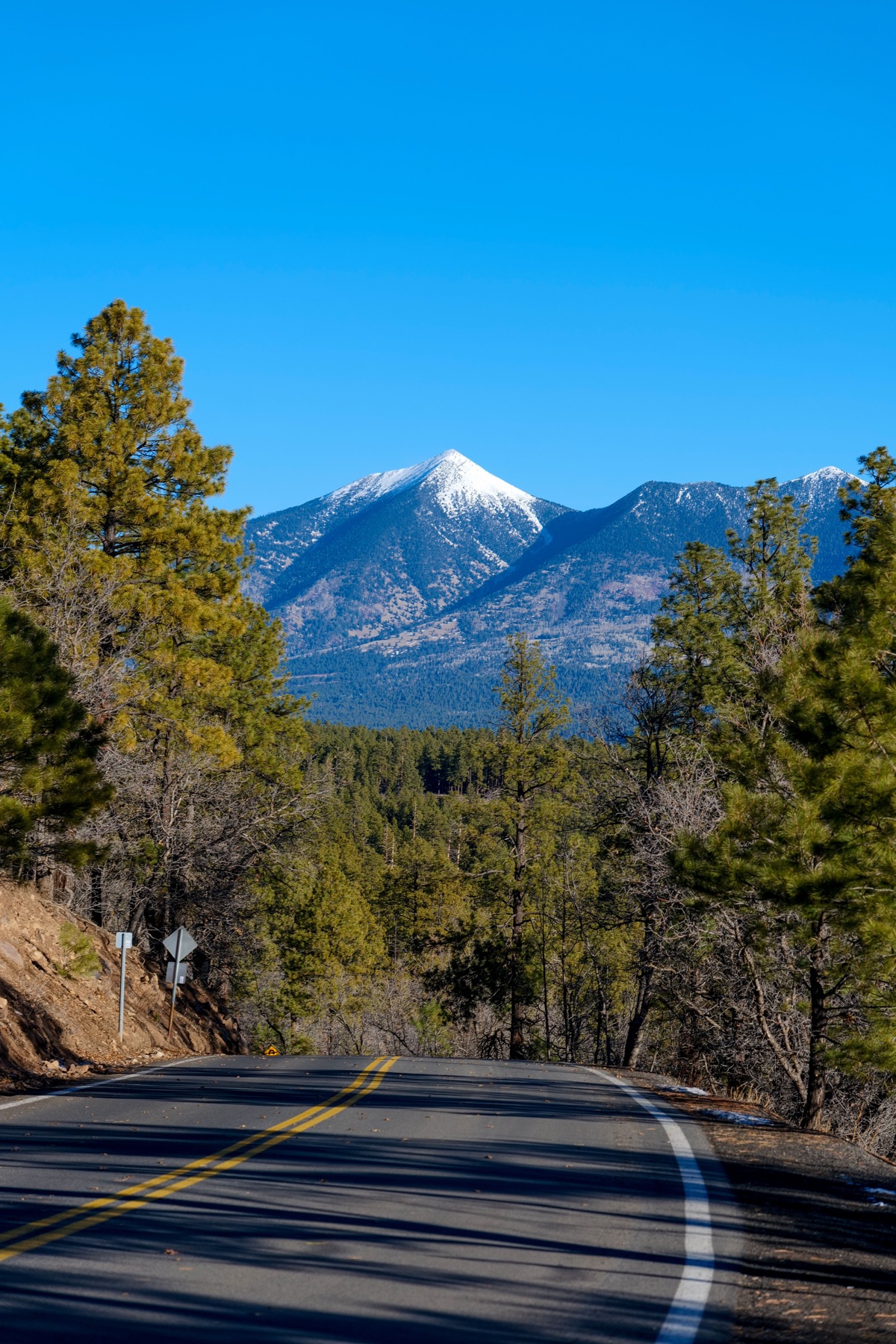
Flagstaff occupies an unusual position in the Southwest.
It is a mountain city inside a desert state, a Route 66 stop that is also a destination, a university town surrounded by public lands, and a regional center serving communities spread across northern Arizona.
Its music scene grows from those overlapping roles.
Artists, students, educators, culture bearers, venue workers, touring musicians, families, and seasonal visitors meet in a city whose scale makes relationships visible. A person playing in a university ensemble may also perform at a brewery, teach private lessons, engineer a local recording, and help organize a festival.
Flagstaff is not one genre or one room. It is a compact network built at high altitude.
Begin With the Homelands
Flagstaff sits within the homelands of Indigenous peoples whose relationships with the region long predate the city, the railroad, Route 66, and the university.
The City of Flagstaff formally recognizes the ancestral homelands of the Havasupai, Hopi, Hualapai, Navajo, Paiute, and Yavapai peoples. Northern Arizona is also home to living tribal nations and communities whose music, languages, ceremonies, art, and cultural work remain part of the present.
Regional coverage must not treat Indigenous culture as scenery or use sacred traditions as a generalized Southwestern mood. Public performances, contemporary artists, educational programs, and tribally authorized sources can be covered with care. Knowledge that is private or restricted must remain so.
Listening responsibly begins by recognizing that this is not empty mountain country. It is a living cultural landscape.
Altitude Changes the Rhythm of the City
Flagstaff sits near 7,000 feet above sea level. Winter weather, summer tourism, wildfire risk, university calendars, and outdoor recreation all influence when people gather and how venues operate.
The city can feel intensely active during a festival weekend and quiet after students leave or snow closes a road. Musicians learn to work within those cycles. Promoters consider weather and travel. Venues serve residents while also meeting visitors who may know Flagstaff only as a stop on the way to the Grand Canyon.
That seasonal rhythm creates both opportunity and instability.
Tourism brings audiences and money into the city. It can also raise costs and encourage culture to be packaged as an amenity. A durable scene depends on whether the people making music can afford to live, rehearse, teach, and maintain spaces through the entire year.
Route 66 Still Carries Music
Route 66 is often presented through neon, automobiles, and nostalgia. In practice, it remains a working cultural corridor.
Touring artists moving between Albuquerque, Phoenix, Las Vegas, Los Angeles, and points farther east or west can place Flagstaff on a regional route. A well-planned show gives a traveling artist a meaningful stop while introducing local performers to new audiences and collaborators.
The highway does not create a scene by itself. People do.
Bookers answer messages, artists share bills, sound workers prepare rooms, hosts find places for musicians to sleep, and audiences decide to show up on a weeknight. These small acts turn geographic position into cultural connection.
Flagstaff’s value is not that it sits between larger markets. It is that the city can form its own relationships with everyone passing through.
Northern Arizona University Anchors Musical Education
Northern Arizona University’s Kitt School of Music is one of the city’s central music institutions. It supports degree programs, ensembles, faculty performances, guest artists, and public concerts that bring students and community audiences into the same cultural system.
University music programs can provide rehearsal rooms, concert halls, technical resources, mentorship, and repeated performance experience. They also attract people whose time in Flagstaff may be temporary but whose relationships can extend far beyond graduation.
The most important effect is not a single concert.
Students teach lessons, join bands, work events, visit local venues, form ensembles, and collaborate across disciplines. Faculty members perform, compose, conduct, research, and connect the university with schools and arts organizations throughout the region.
A university becomes part of a healthy local ecosystem when knowledge and opportunity move in both directions.
Orchestral and Choral Traditions Create Continuity
Flagstaff sustains strong classical and choral traditions through university ensembles, schools, churches, community groups, and regional organizations.
The Flagstaff Symphony Orchestra has served northern Arizona since 1950. Its concerts, educational work, and collaborations provide professional opportunities while giving audiences repeated access to live orchestral music.
Continuity matters in a smaller city.
A young person may encounter musicians through a school program, hear them in a public concert, study with a local teacher, participate in an ensemble, and eventually contribute to the same community. That pathway depends on educators, administrators, donors, technicians, families, and rehearsal spaces as much as it depends on the performance itself.
Classical music is not separate from the wider scene. The same musicians may move between orchestras, chamber groups, theater productions, recording sessions, jazz ensembles, churches, and independent projects.
Jazz Connects Education and Improvisation
Jazz offers another bridge between formal study and local performance.
University ensembles develop technique, repertoire, arranging, and improvisation, while smaller public performances allow musicians to respond directly to a room and to one another. Jam sessions and intimate stages can create mentorship that no classroom can fully reproduce.
Flagstaff’s scale makes these crossings easier to notice.
A student can hear an experienced player nearby, return the following week, begin a conversation, and eventually share a stage. An educator can introduce historical context while also showing how the music functions in a living community.
That exchange keeps jazz from becoming only an academic subject or a museum piece. It remains a practice of listening, memory, risk, and collective decision-making.
Folk, Bluegrass, and Acoustic Music Fit the Human Scale
Acoustic music has a natural place in Flagstaff, but it should not be reduced to mountain-town decoration.
Folk, bluegrass, country, old-time music, and songwriting traditions require serious musicianship and carry distinct histories. They thrive in settings where listeners can hear the grain of a voice, the attack of a pick, and the relationship between players.
Organizations such as Pickin’ in the Pines, presented by Flagstaff Friends of Traditional Music, create gathering points for regional and touring artists, workshops, informal playing, and audiences across generations.
Festivals can strengthen a scene when they connect back to year-round practice.
The deeper infrastructure includes teachers, recurring sessions, instrument repair, independent presenters, record stores, radio programs, and people who welcome beginners into a tradition without lowering its standards.
Punk and Independent Rock Need Small Rooms
Flagstaff’s independent rock and punk communities depend on rooms willing to take chances.
Small venues, bars, all-ages events, record shops, house shows, campus spaces, and temporary stages allow artists to develop before they can guarantee a crowd. They also create opportunities for touring bands whose route may not support a larger room.
The work is practical.
Someone designs the flyer, runs sound, collects money at the door, lends equipment, photographs the set, and tells friends that the show matters. Those actions create a scene long before it appears in tourism materials or regional media.
Small rooms are especially vulnerable in a city facing high property costs and limited commercial space. When one disappears, the loss is not measured only in capacity. The city loses a place where people learned how to organize culture together.
Electronic Music and DJs Create Nighttime Community
DJs and electronic artists connect Flagstaff to wider musical networks while responding to the city’s own scale.
Club nights, independent parties, campus events, breweries, bars, and temporary gatherings can place house, techno, bass music, hip-hop, global dance music, experimental electronics, and familiar crowd records in conversation.
A DJ is not simply filling silence between other activities.
Selection, sequencing, sound, pacing, and audience awareness shape the room. Producers add original work and local identity to sounds circulating internationally. Promoters and technical crews create the conditions in which those choices can be heard properly.
Nightlife becomes cultural infrastructure when it provides consistent space for discovery, movement, and connection—not only entertainment for visitors.
Public Festivals Make the Network Visible
Flagstaff’s public events bring parts of the music ecosystem into shared view.
The Flagstaff Blues and Brews Festival, community celebrations, summer concert series, cultural events, and downtown programming can introduce residents and visitors to artists they might not encounter inside a genre-specific venue.
Large public gatherings also reveal the labor behind performance.
Stages require engineers, production workers, security, vendors, permits, transportation, accessibility planning, marketing, volunteers, and coordination with artists. That employment and experience can strengthen the local industry when regional workers are included and credited.
The strongest festivals do more than import a headliner. They create useful relationships with local performers, educators, businesses, and audiences that continue after the event ends.
Community Radio Expands the Listening Map
Radio remains important in a region where distance separates communities.
KAFF Legends, public radio, university broadcasting, specialty programs, and independent online shows can connect listeners with local musicians, touring events, regional history, and music outside commercial playlists.
Curated radio offers something recommendation systems often do not: context.
A host can explain why a recording matters, identify the players, connect it to an upcoming event, and place it beside music from another era or community. The listener receives a path rather than a single isolated track.
For artists, one informed local play can create a relationship with people likely to attend a show, buy music, or follow the next release.
Flagstaff Serves a Region Larger Than the City
Flagstaff’s music community cannot be understood only within municipal boundaries.
People travel from nearby towns, rural areas, and tribal communities for concerts, education, equipment, rehearsals, and collaboration. Artists based in Flagstaff perform throughout northern Arizona and connect south toward Phoenix, east toward New Mexico, north toward Utah, and west toward Nevada and California.
This regional role creates responsibility.
Coverage should not describe every northern Arizona artist as belonging to Flagstaff. Each community has its own identity and authority. The city can function as a gathering point without absorbing the histories of surrounding places.
A regional hub is strongest when it helps attention travel outward as well as inward.
Affordability Is a Cultural Issue
Flagstaff’s beauty, university, tourism economy, and limited housing supply place intense pressure on affordability.
Musicians and cultural workers feel that pressure directly. Creative work often involves irregular schedules, multiple jobs, seasonal income, and unpaid preparation. High housing and commercial costs make it harder to maintain rehearsal rooms, studios, independent venues, record shops, and long-term artistic careers.
A city can celebrate live music while steadily removing the conditions that allow local musicians to remain.
Supporting culture therefore means more than promoting events. It means considering housing, transportation, wages, late-night safety, accessible public space, sound policy, and the survival of small businesses willing to host creative work.
The future sound of Flagstaff depends partly on who can afford to stay.
How to Listen to Flagstaff
Look beyond a single festival weekend.
Attend university and community concerts. Arrive early for the local opener. Follow a promoter, teacher, radio host, or sound engineer—not only the headlining artist. Visit independent businesses that make room for music. Learn where all-ages performances happen and why those spaces matter.
When encountering Indigenous cultural work, begin with the artist, tribal institution, or authorized source. Do not assume that access to a public event grants permission to reproduce every image, sound, or story.
Follow credits and links. Buy music and merchandise directly when possible. If a touring artist brought you into the room, find out who from northern Arizona shared the bill.
A small city becomes a deep listening experience when attention stays long enough to recognize the network.
A High-Altitude Scene With Regional Reach
Flagstaff’s music culture is shaped by elevation, weather, education, tourism, Indigenous homelands, Route 66 movement, and the work of people who keep gathering despite limited space and high costs.
Its scale is not a weakness.
It allows musicians, educators, organizers, technicians, and listeners to see how their roles connect. It lets a university concert, a punk show, a bluegrass festival, a DJ night, and a symphony season belong to the same civic conversation without pretending they are the same thing.
Flagstaff builds its music scene through proximity—and extends it through regional relationships.
Keep exploring: Visit the developing Flagstaff music page, read how El Paso creates a border music center, browse all Southwest Sound Waves stories, or discover independent artists and releases through 1st Drop Music.