Bluegrass has always been a music of movement.
Songs cross mountains, borders, generations, and communities. Melodies acquire new words. Instruments enter unfamiliar arrangements. Musicians preserve traditions by learning them closely—and keep those traditions alive by refusing to leave them untouched.
From Taos, New Mexico, the Foggy Memory Boys approach string-band music with that restless spirit. Their sound begins with bluegrass and folk instrumentation, then moves through contemporary songwriting, Southwestern psychedelia, energetic improvisation, and what the band calls New Mexican “wild-grass.”
The result belongs to a musical tradition without being trapped inside it.
A String Band From Northern New Mexico
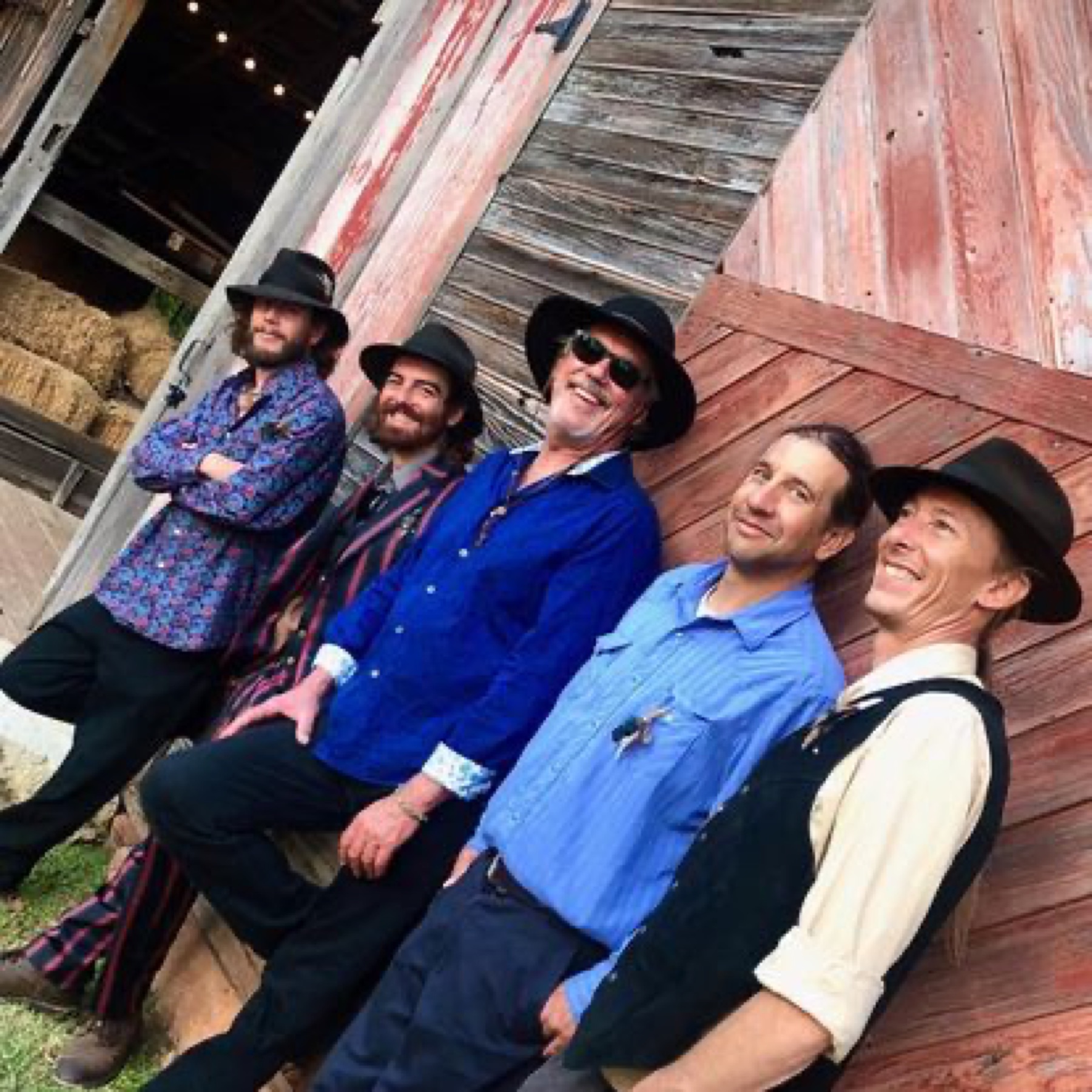
The Foggy Memory Boys bring together five musicians:
- Jacob Hagerty on mandolin and vocals
- Andy Yeomans on acoustic flat-top guitar and vocals
- Willie “Uncle Willie” Hunton on dobro and vocals
- Zephaniah Stringfield on archtop guitar and vocals
- Matt Mallwitz on upright bass
Each instrument carries a recognizable place within American roots music. Mandolin can add rhythmic precision and quick melodic movement. Dobro introduces sustain, metallic resonance, and vocal-like phrasing. Acoustic guitars establish harmony and propulsion. Upright bass gives the ensemble its physical center.
The familiar lineup makes the band’s departures more meaningful. Experimentation has greater impact when musicians understand the foundation they are stretching.
Formed Through Festival Culture
According to the band’s official history, the Foggy Memory Boys formed through late-night music-making associated with Stage 5 at the Walnut Valley Bluegrass Festival.
That origin matters.
Festivals do more than present scheduled performances. Campsites, parking areas, informal stages, and late-night circles become temporary communities where musicians exchange songs and test relationships. People who might never share a formal bill can find themselves playing together for hours.
A jam reveals information quickly. Musicians learn who listens, who leaves space, who understands dynamics, and who can follow a song somewhere unexpected without losing its center.
The Foggy Memory Boys emerged from that environment. Their musical relationship was not assembled only through auditions or professional planning. It developed through participation in a living culture of shared repertoire and spontaneous collaboration.
What Is New Mexican Wild-Grass?
The band describes its music as New Mexican wild-grass—a phrase that communicates both inheritance and intent.
“Grass” places the group in conversation with bluegrass, newgrass, and the wider world of acoustic string-band music. “Wild” suggests that the musicians do not intend to observe every boundary traditionally associated with the form. “New Mexican” identifies the landscape and community from which their version emerges.
This does not mean every song must describe New Mexico or rely on regional imagery. Place can shape music more subtly.
Northern New Mexico influences how artists travel, where they perform, which communities overlap, and how outdoor landscapes coexist with small-town social life. Taos provides a setting where traditional craft, tourism, counterculture, visual art, Indigenous and Hispanic histories, and contemporary experimentation remain in close proximity.
The Foggy Memory Boys’ music reflects that environment through combination rather than imitation.
Craftsmanship Inside the Band
The ensemble’s connection to craft extends beyond performance.
Mandolinist Jacob Hagerty is also identified in the band’s materials as a master luthier and a two-time winner of the New Mexico Mandolin Championships. The relationship between building instruments and playing them offers an especially tangible example of how roots music survives.
A handmade instrument contains decisions about wood, shape, tension, resonance, durability, and feel. Those decisions eventually become musical decisions in another person’s hands.
Instrument making requires patience and precision. So does ensemble playing. A string band depends on countless small adjustments: how firmly a note is attacked, when a musician steps forward, how a harmony settles around a lead voice, and when the arrangement needs restraint instead of another flourish.
The craftsmanship may be invisible during a fast performance, but it supports everything the audience hears.
Songs Before Categories
Technical ability can attract attention in bluegrass, where speed and instrumental precision are immediately apparent. The Foggy Memory Boys place equal emphasis on lyrical content and melody.
That balance is important.
Instrumental skill creates excitement, but songwriting gives a listener something to carry away. A memorable line or chorus can remain long after the details of a solo have faded. Harmony singing turns individual voices into a shared emotional statement.
The group’s best description may therefore be not a list of influences but a set of priorities: songs with a clear center, performances with room to move, and enough instrumental fluency to follow an idea when it leaves its expected path.
Foggy Town
The Foggy Memory Boys released their second album, Foggy Town, in January 2025.
The eleven-track recording includes songs such as “Pines to the Prairie,” “Hard Road,” “Foggy Memory Breakdown,” “Goodbye Old Cowboy,” “Jordan,” “Work All Day,” and “Such a Night.”
The album was recorded and mixed by Peter Oviatt at Moonflower Sounds Studio in Taos. Oviatt co-produced it with the band, while Mike West mastered the project. Additional musicians Peter Oviatt and Elyse Fretz contributed banjo ukulele and violin.
Recording in Taos anchors the album within the community that produced it. The record is not simply music made by a Taos band; it is part of a local network of musicians, studios, visual artists, venues, craftspeople, and listeners.
The album’s availability on vinyl also suits a band whose identity emphasizes physical instruments, live interaction, and musical traditions transmitted through tangible objects.
The Festival Feeling as a Performance Philosophy
The Foggy Memory Boys say they bring a festival atmosphere to the venues they play.
That promise is less about recreating a particular event than preserving a type of relationship between performers and listeners.
Festival audiences often arrive prepared for discovery. They move between stages, hear unfamiliar combinations, dance without needing to know every song, and participate in a temporary community built around listening.
A band can carry that openness into a theater, brewery, club, or community event. The venue changes, but the performance can still feel participatory rather than distant.
For an acoustic ensemble, that connection is especially valuable. The instruments may be traditional, but the experience does not have to feel formal or preserved behind glass.
A Regional Band With a Wider Road
The Foggy Memory Boys have shared bills with respected artists from across bluegrass, Americana, roots music, and adjacent scenes. Their official materials name performers including Tim O’Brien, Molly Tuttle and Golden Highway, Sam Bush Band, the Infamous Stringdusters, the Lil Smokies, Pokey LaFarge, and the Young Dubliners.
These appearances place the group within a broader touring ecosystem while its identity remains distinctly connected to northern New Mexico.
Regional music does not mean music that stays in one region. It means work that carries the perspective of its origin wherever it travels.
For the Foggy Memory Boys, Taos is not a limitation on the audience. It is the ground beneath the music.
Why the Foggy Memory Boys Matter
The Foggy Memory Boys demonstrate that tradition and experimentation are not opposites.
Their instrumentation connects them to generations of American string-band music. Their songwriting, psychedelic edges, performance energy, and New Mexican identity push that foundation into another shape.
They also show why regional coverage must extend beyond the largest cities. Some of the Southwest’s most distinctive music develops in mountain towns, rural communities, festival camps, home workshops, and independent studios.
The band’s story connects all of those spaces.
New Mexican wild-grass is not a rejection of bluegrass. It is what happens when musicians learn the form, carry it into their own landscape, and give themselves permission to let it grow differently.
Listen and Learn More
Visit the Foggy Memory Boys’ official website to hear the band, explore Foggy Town, watch performances, and find current information.
Their official electronic press kit includes biographies, member information, videos, stage materials, and professional resources.
For direct support, listeners can also explore Foggy Town on Bandcamp.