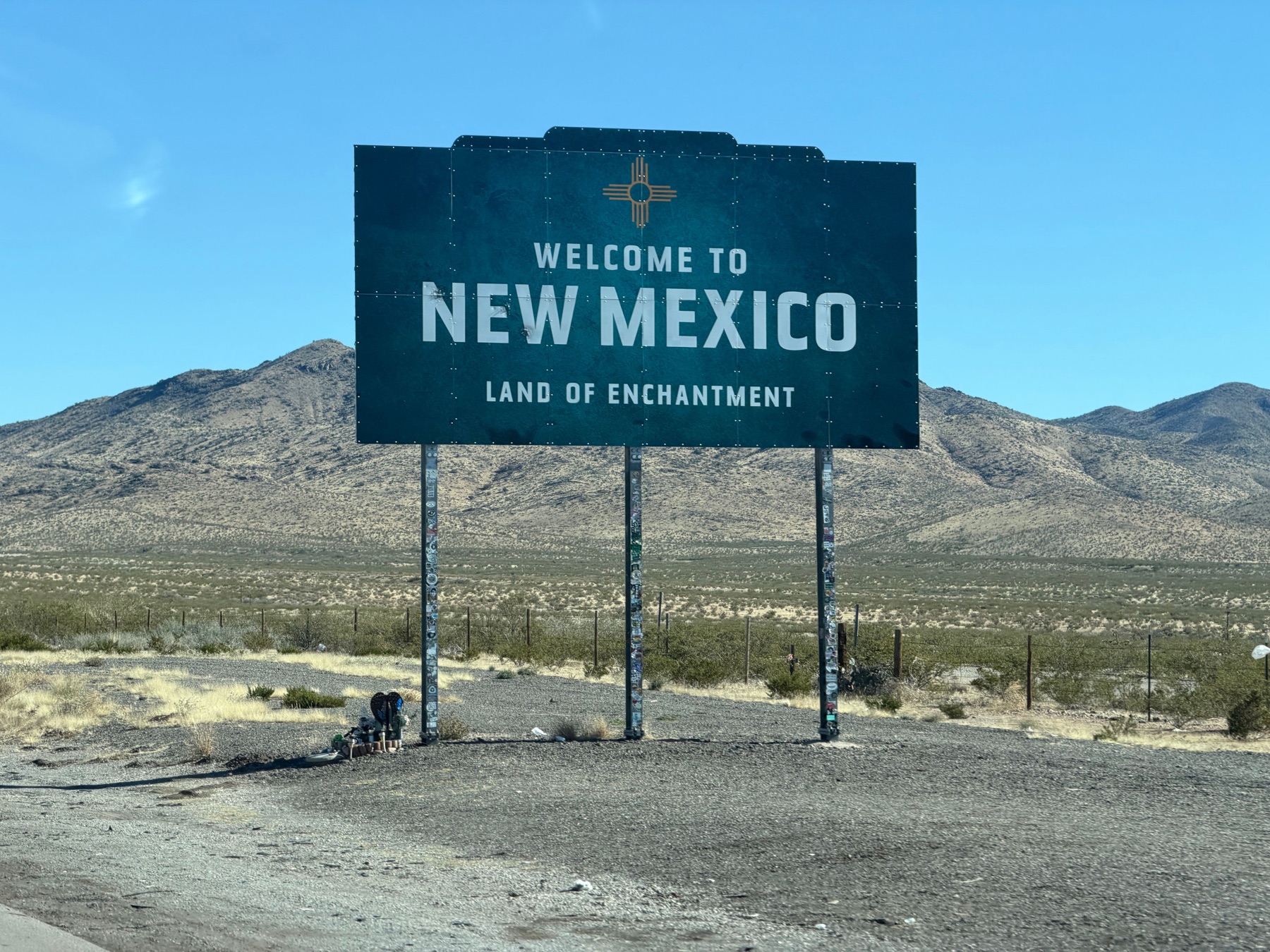
Las Cruces is often described through its landscape.
The Organ Mountains rise dramatically to the east. Agricultural land follows the Rio Grande. Historic Mesilla preserves part of the region’s long relationship with Mexico, territorial change, trade, migration, and cultural exchange.
But Las Cruces is not only a scenic or historic destination.
It is a working music city shaped by borderlands culture, New Mexico State University, downtown redevelopment, public festivals, community ensembles, historic venues, independent performers, and its relationship with nearby El Paso.
The city’s musical identity emerges from movement between these parts.
A Borderlands City Cannot Be Heard in Isolation
Las Cruces sits in southern New Mexico, less than an hour from El Paso and within a region whose cultural relationships extend across the international border.
That location matters.
Families, musicians, students, workers, radio signals, touring routes, instruments, records, and musical ideas move throughout the region. Spanish and English coexist with other languages and cultural traditions. Country, norteño, mariachi, rock, jazz, hip-hop, classical music, punk, electronic music, folk, and experimental work all enter the conversation.
The border may be represented politically as a dividing line, but everyday culture reveals an interconnected region.
A band based in Las Cruces may perform in El Paso. An El Paso artist may build an audience in New Mexico. Students arrive from other communities and form new projects. Touring musicians may treat the two cities as connected opportunities within a single regional route.
Understanding Las Cruces music therefore requires listening beyond municipal boundaries.
The City Is More Than an Extension of El Paso
Proximity to a larger city can create a misleading assumption: that Las Cruces is culturally dependent on El Paso.
The relationship is real, but it is not one-directional.
Las Cruces has its own audiences, institutions, venues, traditions, festivals, educators, and creative communities. Its smaller scale changes how musicians work and how listeners discover them.
Artists may travel between the cities while maintaining a distinct Las Cruces identity. Audiences may attend events throughout the region without treating every performance as part of one undifferentiated scene.
The connection between Las Cruces and El Paso is strongest when both cities are recognized as contributors.
A regional ecosystem does not require one city to disappear inside the reputation of another.
New Mexico State University Is a Musical Engine
New Mexico State University brings students, faculty, visiting performers, educators, and technical resources into Las Cruces.
The university’s Department of Music offers programs in music education, performance, and broader musical study. Its ensembles include choirs, concert bands, jazz, lyric theater, orchestra, and the PRIDE of New Mexico Marching Band.
These are not isolated classroom activities.
Students perform publicly, collaborate across disciplines, teach in the community, form independent projects, and carry their experience into schools, venues, churches, studios, and arts organizations. Faculty members contribute as performers, conductors, composers, educators, and organizers.
The university also creates a continuous cycle of arrival and departure.
New musicians enter Las Cruces every year. Some remain after graduation, while others carry relationships formed in southern New Mexico into different regions. That movement keeps the local scene connected to a wider musical network.
Explore the university’s programs and ensembles through the NMSU Department of Music.
Campus and Community Can Share the Same Ensemble
The relationship between a university and its city becomes stronger when participation moves in both directions.
NMSU’s Masterworks Chorus is open to students, faculty, staff, and members of the greater Las Cruces community. That structure creates a multigenerational ensemble rather than separating academic music from the people living beyond campus.
This kind of access matters.
Community musicians gain opportunities to rehearse and perform substantial work. Students learn beside singers with different life experiences. Faculty connect education with public participation. Audiences see the university as part of the city’s cultural infrastructure.
Other university ensembles collaborate across the department and with outside organizations. The NMSU Philharmonic, for example, works with soloists, faculty, choirs, bands, lyric theater, and regional partners.
These connections turn the university into more than a place where music is studied.
It becomes one of the places where Las Cruces makes music together.
The Rio Grande Theatre Carries Downtown Memory
The Rio Grande Theatre is one of Las Cruces’ most visible cultural landmarks.
Originally built as a movie theater in 1926, it served as a downtown gathering place until closing in 1997. After an extensive restoration, it reopened in 2005 as a performing-arts center.
Today, the city-owned venue presents local, regional, and national performers alongside film, theater, comedy, dance, lectures, and community programming.
Its value is both practical and symbolic.
Las Cruces needs a room where artists can move beyond small-stage conditions without losing the intimacy of a community venue. The restored theater provides that bridge.
Its location across from the Plaza de Las Cruces also helps connect cultural programming with the wider downtown district. A performance can contribute to an evening involving restaurants, public space, galleries, markets, and neighboring businesses.
Preserving a theater does not mean freezing it in the past.
The building remains important because people continue filling it with current work.
Learn more through the Rio Grande Theatre.
The Plaza Makes Music Public
Plaza de Las Cruces gives the city an outdoor civic stage.
Free concerts and festivals allow music to occupy the center of downtown without requiring audiences to enter a formal venue or purchase a ticket. Residents, students, families, visitors, and people passing through the district can share the same event.
The city’s annual Mayor’s Jazz Fest opens the Music in the Park series with a free, family-friendly performance. The series continues with local, regional, and national artists at public locations through the summer.
This repeated programming is more valuable than a single large event.
A recurring series helps audiences develop the habit of attending live music. It creates multiple opportunities for performers. It allows people to discover unfamiliar artists without a large financial commitment.
The plaza also supports festivals such as ¡mira! Las Cruces, where music appears alongside food, visual art, vendors, dance, cultural programming, and community activity.
Public music works best when it is understood as part of civic life rather than temporary entertainment placed in an empty space.
Country Music Reflects More Than a Costume
Country music has an important presence in Las Cruces and southern New Mexico.
Its relationship with the region includes agriculture, ranching, rural life, working communities, dance traditions, family listening, radio, and movement between New Mexico, Texas, and Mexico.
The City of Las Cruces has explicitly recognized country music as part of the area’s culture in programming for the ¡mira! Las Cruces festival.
That connection deserves more depth than hats, boots, and generic Western imagery.
Country music in the borderlands can carry many histories at once. It may draw from Anglo-American songwriting, Mexican musical traditions, cowboy culture, rock, folk, Tejano, and contemporary commercial country. Musicians adapt those influences according to their own families, communities, and experiences.
The strongest regional coverage asks who is making the music, which traditions they claim, and what their songs actually say.
A genre should never become a costume for marketing a city.
Jazz Creates Another Kind of Regional Conversation
Jazz also holds an important public place in Las Cruces.
The Mayor’s Jazz Fest and the New Mexico Juneteenth Jazz Arts Festival bring Black American musical history into prominent civic and cultural spaces. University ensembles, community musicians, visiting performers, and educators sustain that work beyond individual festivals.
Jazz demonstrates how a regional scene can engage a musical tradition with national and international reach while building local opportunities.
That engagement requires historical understanding.
Jazz should not be treated merely as elegant background music for a public event. Its development is inseparable from Black creativity, struggle, innovation, movement, and community life.
Good programming creates space not only for performance, but also for education, accurate attribution, and continued support of the musicians carrying the tradition forward.
Museums Can Become Performance Spaces
Music does not have to remain inside conventional venues.
Las Cruces’ museum system uses public programming to connect exhibitions, local history, education, visual art, and live performance. The recurring Moonlight adult museum program invites musicians, bands, DJs, spoken-word artists, dancers, and other performers to participate.
This opens a useful pathway for interdisciplinary work.
A musician can respond to an exhibition. A DJ can shape the atmosphere of a museum after dark. A performer can reach an audience that did not arrive specifically for a concert.
The city’s open-call system also makes part of the opportunity visible. Artists can see that applications are being accepted rather than needing an existing personal connection to learn that a program exists.
Transparent opportunities do not eliminate every barrier, but they make cultural infrastructure easier to enter.
The city maintains current artist and performer opportunities through its open-calls page.
Small Venues Carry the Scene Between Festivals
Festivals and civic stages create visibility, but smaller independent rooms sustain the calendar.
Bars, restaurants, breweries, coffeehouses, galleries, community theaters, patios, and temporary spaces give performers opportunities to work between major events.
These rooms allow musicians to develop through repetition.
A new band can learn how to structure a set. A songwriter can test unfinished material. A DJ can understand how a local audience responds over several hours. Touring artists can connect with regional performers and begin building an audience.
Smaller venues also provide room for music that may not fit institutional programming.
Punk, metal, experimental music, electronic events, independent hip-hop, and hybrid projects often depend on organizers willing to transform an ordinary room into a temporary cultural space.
These events may leave fewer official records than a city-sponsored festival, but they remain essential to the city’s creative life.
All-Ages Access Determines What Comes Next
A sustainable scene must give young people somewhere to begin.
University programs are important, but not every young musician will pursue formal study. Some learn through family, church, school ensembles, online communities, private lessons, friends, independent shows, and experimentation at home.
All-ages performances allow younger listeners to observe how live music works.
They see artists perform, encounter different instruments and genres, learn audience etiquette, meet potential collaborators, and begin imagining themselves as participants rather than consumers.
When a city lacks all-ages spaces, young musicians must wait, leave town, or attempt to build their own opportunities without support.
Family-friendly public concerts help address part of this need. Schools, libraries, museums, community centers, independent venues, and university programs can extend it further.
The future of a music scene depends on whether new people are allowed into the room.
The Regional Audience Is Spread Out
Las Cruces serves listeners from across Doña Ana County and nearby communities.
That regional reach creates both opportunity and friction.
A performance may attract people from Mesilla, Organ, Anthony, Hatch, Sunland Park, El Paso, and other communities. At the same time, transportation, distance, event timing, cost, and limited public transit can prevent interested listeners from attending.
Promotion must account for that geography.
An effective event listing should provide a clear address, start time, age policy, ticket price, accessibility details, and parking information. Outdoor events should communicate weather expectations. Touring artists should identify Las Cruces as part of southern New Mexico rather than assuming every potential listener understands the region.
Basic information is cultural infrastructure.
When details are scattered or incomplete, audiences do not always take the risk.
Cultural Traditions Require Specificity
Southern New Mexico contains Indigenous, Hispano, Mexican American, Black, Anglo, immigrant, military, agricultural, university, and cross-border histories.
These experiences influence music, but they should not be flattened into one generalized Southwestern identity.
Mariachi, norteño, jazz, country, Indigenous cultural work, church music, hip-hop, rock, and classical performance belong to different histories even when musicians bring them into conversation.
Responsible journalism must name those histories accurately and follow the leadership of the communities involved.
Cultural exchange can create extraordinary music.
It becomes exploitative when context, credit, permission, and power are ignored.
The Creative Economy Includes Invisible Work
Every performance depends on people the audience may never see.
Audio engineers prepare systems and solve problems. Lighting crews shape the room. Promoters assemble programs and accept financial risk. Designers create posters. Photographers and filmmakers preserve the event. Venue staff manage hospitality, accessibility, safety, and cleanup.
Educators develop musicians long before they appear onstage. Instrument technicians keep equipment working. Journalists, radio hosts, and calendar editors help audiences find the music.
The City of Las Cruces’ long-range planning recognizes arts and culture as contributors to community life, education, tourism, and the creative economy.
That recognition is useful only when it extends to the people performing the labor.
Exposure cannot replace sustainable pay, reliable spaces, and professional respect.
Growth Should Strengthen the People Already Creating
Downtown investment, festivals, university activity, tourism, and regional population growth can expand the audience for Las Cruces music.
They can also raise costs and reward only the most easily marketed version of the city.
A healthy cultural strategy asks whether working artists can afford to remain, whether small venues can survive, whether local performers receive meaningful opportunities, and whether established communities participate in decisions about how their culture is represented.
Growth should create more stages without erasing the informal spaces where artists learn.
It should welcome visitors without turning local music into scenery.
It should strengthen regional connections without making Las Cruces culturally subordinate to a larger neighboring city.
How Listeners Can Participate
Listeners help determine whether the Las Cruces music ecosystem remains healthy.
They can:
- Attend local performers as well as touring acts.
- Arrive early enough to hear opening artists.
- Explore university concerts and community ensembles.
- Participate in free public music respectfully.
- Support independent venues between major festivals.
- Buy music and merchandise directly from artists.
- Share complete and accurate event information.
- Follow performers through websites and mailing lists they control.
- Credit musicians, photographers, designers, and organizers.
- Travel between Las Cruces, El Paso, and surrounding communities while recognizing the distinct identity of each scene.
- Make room for young artists and all-ages programming.
- Learn the history behind cultural traditions instead of treating them as regional decoration.
Listening becomes support when it continues after the event ends.
Las Cruces Is a Crossroads, Not a Pass-Through
Las Cruces occupies a powerful position within the Southwest.
It connects New Mexico and Texas, the United States and Mexico, a university and a wider community, agricultural history and urban growth, intimate stages and public festivals.
Those connections do not make the city temporary.
Las Cruces is not merely a place musicians pass through on the way to somewhere larger. It is a place where people learn, collaborate, perform, teach, organize, and build audiences of their own.
Its musical identity cannot be reduced to one genre, institution, or neighboring city.
Las Cruces makes music at the crossroads—and the crossroads belongs to the people who continue showing up there.
Explore Las Cruces Music
Explore public programs, cultural organizations, museums, and performing arts through the City of Las Cruces Arts and Culture guide.
Find city festivals, concerts, and community programming through the Las Cruces events calendar.
Learn about music education and public performances through the NMSU Department of Music.
See upcoming performances at the Rio Grande Theatre.