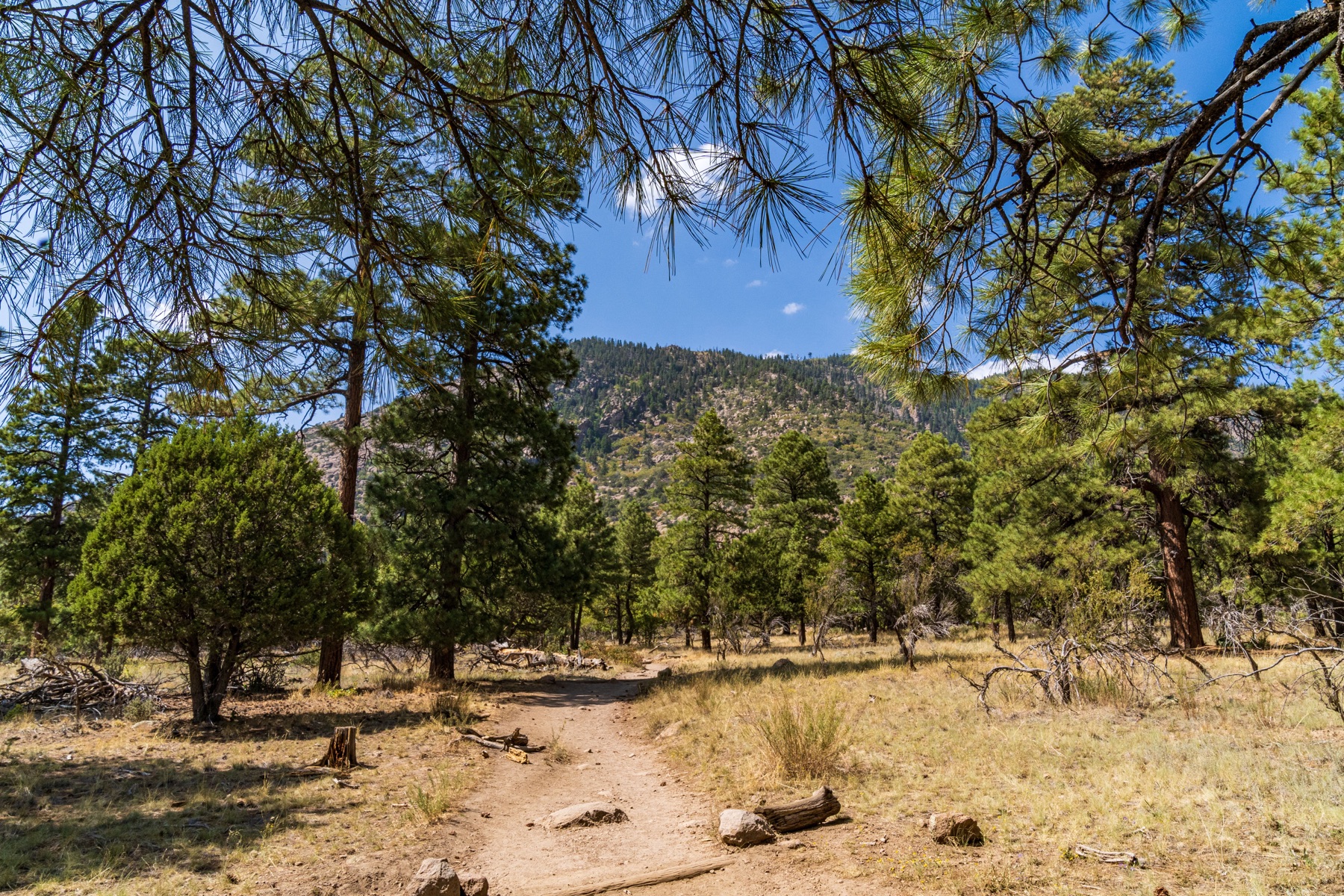
Prescott is often introduced through a familiar collection of images: Whiskey Row, the courthouse, rodeo history, Victorian buildings, pine-covered hills, and the mythology of the American West.
Those images are visible, but they do not fully explain the city.
Prescott is also a working music community shaped by Indigenous homelands, public gatherings, college stages, community theaters, independent venues, music education, seasonal festivals, neighborhood businesses, and musicians building careers across Arizona’s central highlands.
The city’s musical life does not belong exclusively to Western heritage or any single genre.
It lives in the movement between the courthouse square and the small room.
Begin With Yavapai Homelands
Prescott exists within the homelands of Yavapai people and beside the sovereign Yavapai-Prescott Indian Tribe.
That fact should shape how the region is understood.
Prescott’s public identity frequently emphasizes territorial settlement, mining, ranching, military history, and frontier culture. Those histories cannot be presented as the beginning of the land’s cultural story.
Indigenous communities lived, created, gathered, and maintained relationships with this region long before Prescott became Arizona’s territorial capital.
Contemporary music coverage should not use Indigenous culture as Western atmosphere. Public performances and artists can be covered through authorized sources, tribal institutions, and the people creating the work. Sacred or restricted cultural knowledge should remain outside ordinary entertainment reporting.
A fuller listening map begins by recognizing whose homelands the city occupies—and whose cultures remain present.
The Courthouse Plaza Becomes a Public Stage
The Yavapai County Courthouse Plaza sits at the center of Prescott’s public identity.
During festivals, concerts, holidays, civic events, and summer gatherings, the square becomes one of the region’s most visible stages. People bring chairs and blankets, move among downtown businesses, meet neighbors, and hear music without entering a traditional venue.
The plaza demonstrates what public space can contribute to a music ecosystem.
A free outdoor performance removes some of the financial and social barriers that can make a concert feel inaccessible. A family, visitor, student, older resident, or person encountering an unfamiliar genre can participate without committing to a full night inside a club.
Prescott’s official calendar shows how frequently downtown streets, the plaza, parks, schools, and other shared facilities become event spaces. Explore current public programming through the City of Prescott’s special-events calendar.
Public visibility is valuable, but it is only one layer of the scene.
The square works best when it leads listeners toward the artists, teachers, organizations, and smaller rooms active throughout the year.
Bluegrass Has a Visible Place in the City
The Prescott Bluegrass Festival transforms downtown into a free weekend of traditional and contemporary bluegrass.
The festival brings national, regional, and local performers together on the courthouse plaza. Its open setting allows experienced listeners, families, visitors, musicians, and people casually passing through downtown to share the same space.
Bluegrass can appear simple when performed well. The songs may be direct, and the instruments are familiar. Underneath that accessibility are demanding practices of timing, harmony, repertoire, listening, improvisation, and ensemble communication.
Festivals help make those traditions visible.
Their deeper value comes from what happens around the formal performances: musicians meeting one another, young players seeing advanced performers at close range, informal picking, conversations about instruments and songs, and audiences discovering artists they can continue supporting.
The Prescott Bluegrass Festival describes its mission as presenting traditional and contemporary forms while maintaining high musical standards.
That combination matters. A living tradition must preserve knowledge while making room for new participants and interpretations.
Acker Night Turns Downtown Into a Musical Network
One of Prescott’s most distinctive musical traditions happens when downtown businesses become temporary performance spaces.
The J.S. Acker Musical Showcase began in 1988 with eight performers appearing in eight shops. It has grown to involve more than 100 musicians and participating businesses.
For one evening, music spreads across downtown.
A listener might hear a choir, instrumental ensemble, songwriter, student group, jazz performance, folk musician, rock band, or holiday program by walking a short distance. Stores and other businesses become small stages, each offering a different experience.
The event also supports music education.
Performers donate their time, volunteers organize the evening, and audience contributions help fund music lessons, instruments, school programs, and opportunities for young musicians.
That structure connects musicians, businesses, volunteers, families, education, and downtown public life at once.
Acker Night shows that cultural infrastructure does not always require one large building. Sometimes it emerges when many small spaces agree to participate in the same purpose.
Read the history and educational mission through the Acker Night Musical Showcase.
Music Education Creates the Next Audience
Youth music programs are not secondary to a city’s professional scene.
They create future performers, listeners, teachers, technicians, organizers, and supporters.
A student who receives access to an instrument or private lessons may not become a full-time musician. That is not the only measure of success. Music education develops listening, collaboration, discipline, confidence, creativity, and the ability to participate meaningfully in cultural life.
Prescott’s community traditions recognize that connection.
Acker Night raises money for music scholarships and school programs. Local educators maintain instrumental, vocal, theater, and ensemble opportunities. Community performances give students a reason to practice and a place to be heard.
These pathways are especially important when school arts programs face limited budgets.
A healthy music city does not wait for talented young people to find access accidentally. It builds multiple entry points and keeps them visible.
Yavapai College Connects Training and Performance
Yavapai College provides another major piece of Prescott’s musical infrastructure.
Its Prescott campus includes the 1,100-seat Jim and Linda Lee Performing Arts Center, supporting concerts, theater, student productions, visiting performers, community programming, and large-scale presentations.
A college performing-arts center can do several jobs at once.
It provides students with practical experience inside a professional environment. It gives the community access to productions that require more technical capacity than a small venue can offer. It creates employment and training opportunities for performers, designers, directors, stage crews, audio workers, and administrators.
The college also helps connect Prescott with the surrounding region.
Yavapai County contains communities separated by significant distances. A regional college can create shared educational and cultural resources while maintaining relationships with Prescott Valley, the Verde Valley, Sedona, and other nearby areas.
Explore the institution and its performance facilities through Yavapai College.
Historic Stages Remain Useful When They Stay Active
Preserving a historic theater means more than protecting its exterior.
The Elks Theatre and Performing Arts Center gives Prescott an example of a historic building continuing to serve contemporary cultural work. Its facilities support performances, classes, rehearsals, recording, dance, events, and community use.
That range is important.
A theater can host the finished performance, but artists also need places to practice, develop technique, record work, meet collaborators, and prepare for the stage.
The Elks describes its mission as providing Quad-City residents with a place to practice, perform, and perfect disciplines across the performing arts.
Those three actions describe a functioning cultural system. Practice happens before public attention. Performance creates connection. Continued development allows the work to grow.
Learn more through the Elks Theatre and Performing Arts Center.
Community Theater Is Part of the Music Scene
Musical life does not exist only inside concerts.
Community theater brings singers, instrumentalists, composers, directors, choreographers, designers, builders, technicians, and audiences into the same production. A musical requires artistic cooperation across disciplines and creates opportunities for people with different levels of experience.
Productions keep rehearsal rooms active. They provide roles for performers who may not participate in conventional bands. They introduce audiences to live singing and instrumental accompaniment. They also train people in lighting, stage management, sound, costume, set construction, and other work that supports the wider performing-arts economy.
These technical and organizational skills can transfer between theaters, concerts, festivals, schools, churches, and independent events.
The music ecosystem becomes stronger when those connections are recognized.
Whiskey Row Is More Than a Tourism Image
Whiskey Row is one of Prescott’s best-known destinations.
Its historic identity attracts visitors, but the surrounding bars, restaurants, patios, and event rooms also employ working musicians. Regular performances can help artists develop stamina, repertoire, stagecraft, and the ability to understand different audiences.
This work should not be dismissed as background entertainment.
A musician playing several sets must manage pacing, requests, sound limitations, changing crowds, and the practical demands of live performance. These rooms may support solo performers, cover bands, country artists, rock groups, acoustic ensembles, and original musicians building an audience one night at a time.
The challenge is balance.
When a district is marketed heavily toward visitors, local music can be pushed toward a narrow image of what Prescott is supposed to sound like. Western and country traditions belong in the city, but they should not become a costume every artist is expected to wear.
The strongest downtown music culture leaves room for the city’s full creative range.
Western Music Is a Tradition, Not a Prop
Prescott’s Western identity includes real musical histories.
Cowboy songs, dance music, country, folk storytelling, bluegrass, poetry gatherings, ranching traditions, and regional songwriting all carry knowledge about work, landscape, migration, humor, loss, and community.
Respecting these traditions requires more than repeating familiar symbols.
It means listening to the words, identifying the sources, learning how songs changed as they traveled, and recognizing the difference between lived history and entertainment mythology.
It also means acknowledging whose perspectives were excluded from popular frontier narratives.
Indigenous people, Mexican and Mexican American communities, women, workers, immigrants, and other residents shaped the region even when familiar Western stories pushed them to the edge.
Music can preserve mythology, but it can also complicate it.
Original Music Needs Rooms That Permit Risk
Heritage festivals and public celebrations give Prescott music visibility. Original artists also need small spaces where the outcome is less predictable.
A developing band cannot always guarantee ticket sales. A songwriter may need to test new material. An experimental artist may require a patient audience. A touring act may arrive in the city before local listeners recognize the name.
Independent venues, bars, cafés, galleries, record stores, house shows, college rooms, and temporary stages create permission for that work to begin.
These spaces build scenes through repetition.
Musicians meet engineers and photographers. Bands exchange shows. Audience members become organizers. Artists hear one another and form new projects. A visiting performer leaves with a reason to return.
Prescott’s small-room culture is therefore not separate from its larger festivals. It is part of the process that produces artists ready for those public stages.
The Quad Cities Share a Cultural Economy
Prescott’s music ecosystem extends into Prescott Valley, Chino Valley, Dewey-Humboldt, and surrounding communities.
The term “Quad Cities” reflects an area where people regularly cross municipal boundaries for work, education, shopping, performances, and community life.
Musicians do the same.
A performer may live in one community, rehearse in another, teach elsewhere, and play throughout the region. Audiences follow artists across those boundaries. Schools, churches, theaters, bars, festivals, and civic organizations become part of a shared circuit.
That movement expands opportunity, but it can also hide the amount of travel and coordination required to sustain a musical life.
Regional coverage should name the specific places involved instead of treating every performance as simply “Prescott.” Each community contributes its own venues, audiences, histories, and organizers.
Prescott can serve as a hub without absorbing the identities of its neighbors.
Public Events Depend on Invisible Labor
A concert on the courthouse square may feel effortless to the audience.
It is not.
Public performances require permits, schedules, electrical access, staging, sound reinforcement, accessibility planning, security, sanitation, insurance, transportation, volunteers, artist communication, and coordination with surrounding businesses.
That labor determines whether the event is safe, welcoming, and musically effective.
Recognizing production workers changes how a scene is understood. The sound engineer, stage manager, volunteer coordinator, municipal worker, business owner, and person marking street closures are part of the cultural system.
Festivals should create opportunities for local workers as well as performers. Clear credits, fair compensation where possible, and continuing relationships can turn a temporary event into long-term regional capacity.
Affordability Determines Who Can Keep Participating
Like Flagstaff and other desirable Arizona communities, Prescott faces tension between cultural appeal and affordability.
Tourism, retirement, population growth, housing costs, commercial rent, and limited late-night infrastructure affect artists and venue workers directly.
Musicians often assemble income from several sources: performances, teaching, production, technical work, service jobs, freelance projects, and employment outside music. Rising costs can make that combination increasingly difficult.
A city can promote live music while slowly losing the people who create it.
Cultural planning therefore connects with housing, transportation, wages, youth access, business survival, noise policy, and the availability of rehearsal and performance space.
Preserving the image of a music-friendly town is not enough.
The people doing the work must be able to remain part of it.
How to Listen to Prescott
Begin at the courthouse plaza, but do not stop there.
Attend a free public performance and follow one of the local artists afterward. Visit a college production. Enter a historic theater. Listen in a small room where the performers are still developing their sound.
Explore the city outside the biggest holiday and tourism weekends.
Learn who teaches music, repairs instruments, books shows, operates sound, photographs performances, and creates opportunities for young artists. When a business hosts live music, ask whether it regularly supports local performers.
Treat Western traditions with curiosity rather than assumption. Approach Indigenous cultural work through the people and institutions authorized to present it.
Follow credits. Buy directly from artists. Tip working musicians. Arrive in time for the opener.
Most importantly, listen for the parts of Prescott that do not fit the postcard.
A Scene Built Through Shared Space
Prescott’s music scene is visible because so many kinds of spaces participate.
The courthouse plaza becomes a stage. Shops become listening rooms. A college supports large productions. A historic theater provides places to practice and perform. Bars employ working musicians. Community organizations connect music with education. Small venues allow original work to develop.
No single institution contains the whole scene.
Its strength comes from the movement between them—and from the people who keep connecting public celebration with the quieter work that happens throughout the year.
Prescott’s music lives between the square and the small room.
That is exactly where Southwest Sound Waves will continue listening.
Keep exploring: Read how Flagstaff builds a music scene at high altitude, browse all Southwest Sound Waves stories, or discover independent artists and releases through 1st Drop Music.