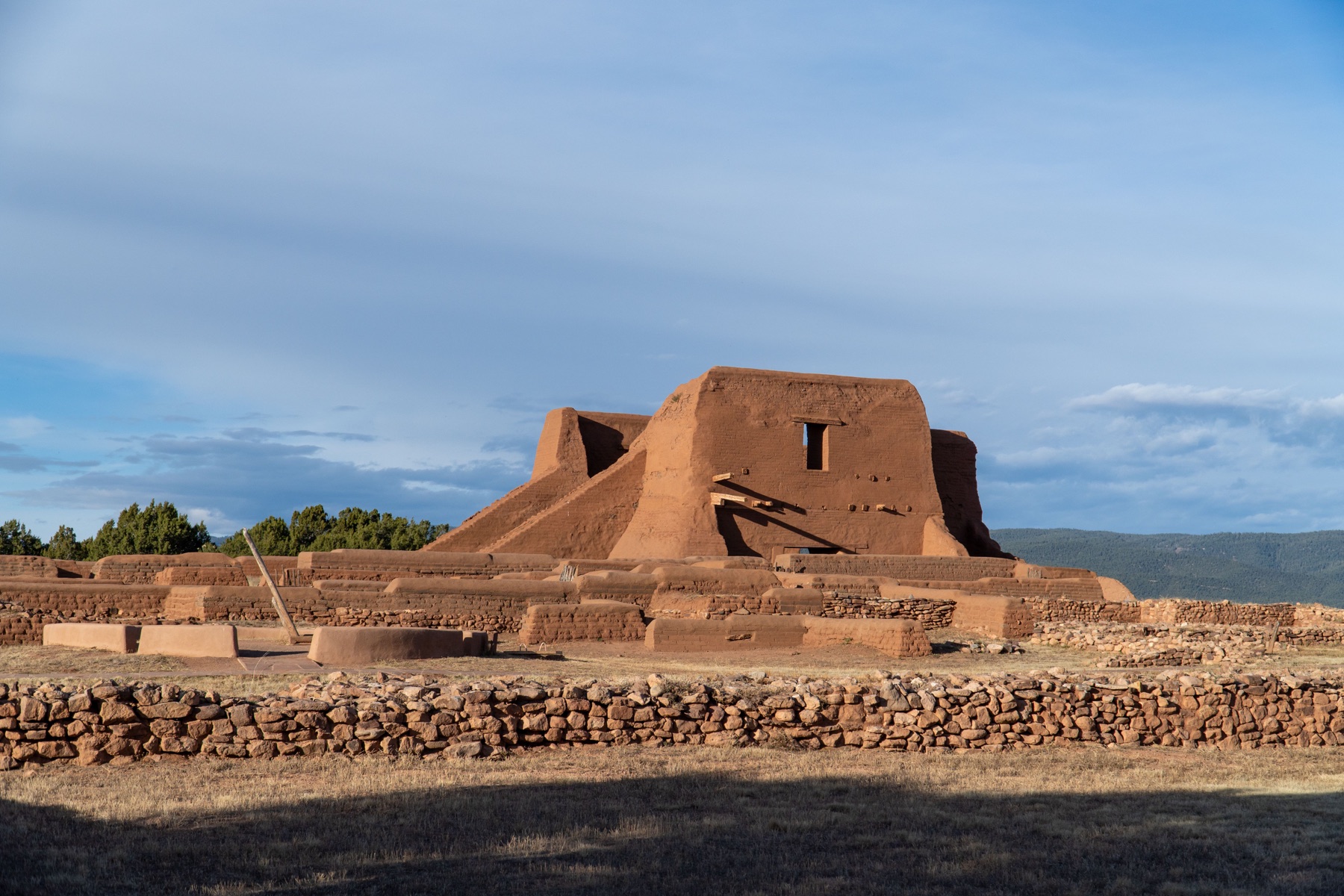
Santa Fe is one of the most visually recognizable cities in the Southwest.
Its adobe architecture, museums, galleries, markets, craft traditions, and surrounding mountains have shaped an international image. That reputation is deserved, but it can make another part of the city’s creative life easier to overlook.
Santa Fe is also a music city.
Its musical culture includes Native and Hispano traditions, flamenco, folk, Americana, country, rock, blues, jazz, classical music, opera, electronic work, experimental performance, and artists combining several of those forms.
Music happens in theaters and restaurants, studios and breweries, on the Plaza and in the Railyard, inside small rooms and across major outdoor stages.
To understand Santa Fe as a creative city, people must listen as carefully as they look.
The City Different Has More Than One Sound
Santa Fe’s “City Different” identity suggests a place set apart by its history, architecture, landscape, and cultural concentration.
Musically, however, difference does not produce one unified sound.
The city’s musical life grows from overlapping communities with distinct histories and needs. Traditional music exists alongside contemporary experimentation. International performers appear beside local artists. Formal concert institutions share a city with bar stages, dance floors, independent studios, community programs, and informal collaborations.
That variety is important because a healthy creative city cannot be understood only through its most marketable image.
Santa Fe’s music is not valuable because it can be made to match the city’s visual brand. It is valuable because it reveals how people living in the region actually create, gather, remember, question, and change.
Arts as Civic Infrastructure
The City of Santa Fe’s Arts and Culture Department describes the arts as civic infrastructure.
That phrase deserves attention.
Infrastructure is usually associated with roads, water, utilities, communication systems, and public facilities. These systems make daily life possible even when people do not consciously notice them.
Cultural infrastructure performs a related function.
Creative spaces allow people to gather. Funding helps artists complete work. Public programs create access. Education develops skills and confidence. Archives preserve memory. Performances create occasions for people who might otherwise remain separate to occupy the same place.
Treating music and the arts as infrastructure changes the conversation. They are no longer decorative additions placed on top of a functioning city. They become part of what allows the city to function socially, emotionally, culturally, and economically.
Tradition Is Not Frozen
Santa Fe’s history is deep, layered, and still alive.
The city stands on the ancestral lands of O’ga Po’geh Owingeh. Pueblo, Indigenous, Hispano, Mexican, Anglo, and many other communities have shaped the region through music, craft, ceremony, labor, language, and migration.
Responsible cultural coverage must avoid treating those traditions as interchangeable pieces of a generalized Southwestern identity.
Each practice belongs to particular people, histories, and relationships. Public visibility does not remove the need for context, permission, attribution, and respect.
Tradition should also not be confused with stasis.
Music survives because people teach it, perform it, adapt it, debate it, and decide what it means in the present. A traditional instrument can enter a contemporary arrangement. An inherited rhythm can support a new story. A young musician can honor a form without reproducing it exactly as a previous generation did.
Santa Fe’s creative strength comes partly from this ongoing relationship between continuity and change.
Small Rooms Make Close Listening Possible
Many Santa Fe music venues are relatively intimate.
That scale creates a particular kind of listening experience. Audiences can see small gestures between musicians, hear the natural character of instruments, and notice how performers respond to the room.
The boundary between stage and audience becomes thinner.
Restaurants, bars, breweries, hotels, galleries, and community spaces all participate in the city’s live-music network. Places such as El Farol and Second Street Brewery represent the role that hospitality venues can play in sustaining regular performance.
These stages may not always receive the attention given to major institutions, but frequency matters. A city needs places where music can happen on an ordinary weeknight—not only during prestigious festivals or tourist seasons.
Repeated opportunities allow artists to develop, audiences to build habits, and working musicians to earn income.
Studios Allow the Sound to Travel
Santa Fe’s musical ecosystem includes recording studios and independent labels as well as performance spaces.
A studio changes what regional music can become.
Live performance connects musicians with people present in a particular room. Recording allows the work to move beyond that time and location. A song made in Santa Fe can reach listeners throughout the Southwest and far beyond it.
Studios also create a different kind of creative environment. Musicians can examine details, layer sounds, revise arrangements, experiment with production, and preserve performances that might otherwise disappear.
The city’s tourism materials identify local recording operations including Kitchen Sink Studios and Frogville Records as parts of the wider Santa Fe music community. Their presence shows that the city does not merely present music—it helps produce and document it.
Recording infrastructure gives local artists the ability to retain more control over how their work enters the world.
The Plaza Becomes a Shared Stage
Public music changes how people experience a city.
Santa Fe’s Plaza has long functioned as a gathering place, and free concert programming allows it to become a stage and dance floor as well.
The significance is not only the size of the audience. It is the mixture within it.
Residents, visitors, families, dedicated music fans, and people who encountered the performance unexpectedly can share the same event. Someone who would not purchase a ticket to an unfamiliar artist may stop, listen, and become interested.
Programming extending into the Railyard, SWAN Park, and other community locations distributes those opportunities across different parts of Santa Fe.
Public concerts lower barriers, but they also make a larger statement: contemporary music belongs inside the city’s visible civic life.
Major Institutions and Local Artists
Santa Fe supports internationally recognized performing-arts institutions, including the Santa Fe Opera and the Lensic Performing Arts Center.
These organizations bring major productions and touring artists to the region. They attract audiences, employ creative and technical professionals, and contribute to Santa Fe’s international reputation.
Their value to the local ecosystem becomes greatest when that attention also creates opportunities for New Mexico artists and cultural workers.
A major stage and a small local room serve different purposes. One cannot replace the other. The strongest ecosystem allows movement and exchange between scales.
A musician might begin in a small venue, participate in public programming, record locally, collaborate across disciplines, and eventually appear on a larger stage. A touring performer may work with a local crew, draw audiences into nearby businesses, or introduce listeners to a regional opening artist.
The goal is not to make every institution identical. It is to strengthen the pathways connecting them.
Tourism Creates Opportunity—and Pressure
Santa Fe’s position as a major cultural destination gives musicians access to audiences from around the world.
That attention can support performances, recordings, venues, and creative employment. Visitors often arrive actively looking for art and culture, making them receptive to discovery.
Tourism can also place pressure on a city’s musical identity.
Artists may be encouraged to produce the version of the Southwest that outsiders already expect. Venues may prioritize music that functions as atmosphere rather than work demanding attention. Cultural traditions can be flattened into marketable symbols detached from the people who sustain them.
Strong regional coverage can help resist that simplification.
The role of music journalism is not to tell visitors that every sound confirms the image they brought with them. It is to reveal the complexity that the familiar image leaves out.
Santa Fe’s musicians are not performing a single idea of Santa Fe. They are creating from within a living city.
Supporting Artists Beyond Exposure
Creative communities cannot survive on visibility alone.
Artists need pay, rehearsal and performance space, affordable housing, healthcare, technical resources, professional relationships, and reliable access to opportunities.
Santa Fe’s Arts and Culture Department identifies economic sustainability, creative spaces, public engagement, youth arts, funding, and connections between cultural workers as areas of focus. Its developing artist-resource efforts reflect an understanding that creative work needs practical support.
This is particularly important in a city where a strong cultural reputation can contribute to rising costs that make it difficult for working artists to remain.
Celebrating Santa Fe as an arts destination means little if the people creating its culture cannot continue living and working there.
Music Connects the Disciplines
Santa Fe is especially suited to collaboration across artistic forms.
A musician may work with dancers, filmmakers, poets, visual artists, craftspeople, designers, or multimedia performers. A gallery can become a temporary venue. A film may require an original score. Traditional craft and instrument making can intersect. New-media installations may depend on sound as much as image.
These collaborations challenge the habit of separating “music” from the rest of the arts.
Sound changes how people experience space, movement, narrative, and visual information. Musicians are part of Santa Fe’s wider creative economy even when their work does not fit neatly inside a gallery or museum.
Recognizing that connection makes the city’s cultural identity more complete.
Listening Beyond the Postcard
The familiar image of Santa Fe is powerful, but it is incomplete.
The city is not only galleries, adobe walls, dramatic sunsets, and established institutions. It is also rehearsals, load-ins, late sets, recording sessions, public dances, experimental performances, community workshops, and musicians trying to sustain a life through their work.
Santa Fe’s sound cannot be reduced to one genre or historical period.
It lives in the relationship between tradition and innovation, local life and international attention, intimate venues and major stages, public investment and independent risk.
Santa Fe is a music city because people continue doing the work required to make music part of its daily life.
The next step is simple: listen.
Explore Santa Fe Music
Learn about cultural programs, artist resources, funding, and public initiatives through the City of Santa Fe Arts and Culture Department.
Explore current venues and performances through Tourism Santa Fe’s live-music guide and Santa Fe events calendar.
Continue with Southwest Sound Waves’ profile of Desert Mind and Transcendental Desert Rock.