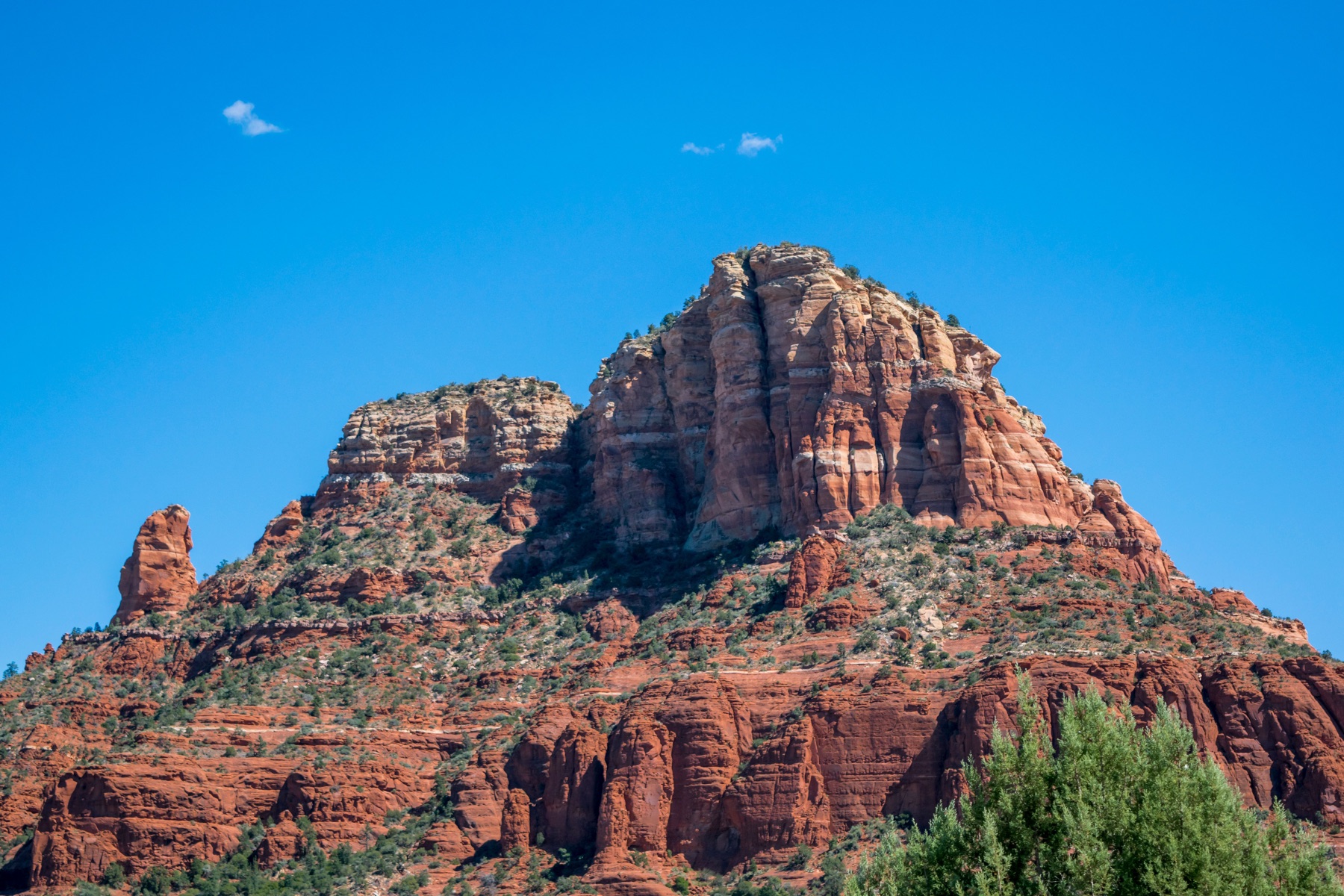
Sedona is one of the most visually recognizable places in the American Southwest.
That visibility can make the city difficult to hear.
Photographs of red-rock formations, tourism campaigns, wellness imagery, and spiritual language often become so dominant that the people doing sustained cultural work disappear behind the landscape.
Sedona is not simply a beautiful setting where music occasionally happens.
It is part of a wider Verde Valley music ecosystem supported by performers, educators, arts organizations, community spaces, theaters, independent businesses, public programs, technicians, donors, volunteers, and audiences living throughout northern Arizona.
To understand Sedona’s music, the landscape can be the beginning of the conversation—but it cannot be the entire story.
Begin With the Homelands
Sedona and the Verde Valley exist within Indigenous homelands connected to living tribal nations and communities, including the Yavapai-Apache Nation and Hopi, Yavapai, Apache, and other peoples whose histories extend throughout the region.
That presence should not be reduced to a tourism aesthetic.
Sedona businesses and promotional materials frequently use Indigenous imagery, names, objects, and generalized ideas about spirituality. Those uses can separate cultural material from the people and communities to whom it belongs.
Responsible music coverage must make clearer distinctions. A contemporary Indigenous artist can speak about their own work. A tribal institution can provide authorized cultural information. A public performance may be documented according to the permission given by its organizers and participants.
None of those situations grants outsiders unrestricted authority to interpret ceremonies, reproduce restricted knowledge, or turn Indigenous identity into decorative atmosphere.
Listening carefully begins by recognizing the cultural authority of the people whose homelands surround the city.
The Landscape Influences Art Without Explaining It
Sedona’s landscape affects creative life.
Light changes rapidly against the rock. Canyons alter the movement of sound. Weather determines whether an outdoor performance remains possible. Trails, waterways, wildlife, dark skies, and the physical scale of the formations influence how residents and visitors experience the region.
Artists may respond directly to those conditions. A composer might work with silence, distance, or environmental sound. A songwriter may write about a specific place. A concert presenter may choose a setting because it changes the relationship between performer and audience.
But landscape should not become a substitute for understanding the artist.
Not every musician in Sedona makes “desert music.” Not every performance is spiritual, meditative, mystical, or cinematic. Artists working in classical music, jazz, rock, folk, electronic music, improvisation, theater, hip-hop, and experimental sound deserve to be heard through the substance of their work.
The red rocks belong in the frame. They should not obscure the people.
Sedona Is Part of the Verde Valley
A city boundary does not contain Sedona’s musical community.
Artists and audiences move among Sedona, Cottonwood, Clarkdale, Jerome, Camp Verde, Cornville, Oak Creek, and other Verde Valley communities. A musician may live in one place, teach in another, rehearse somewhere else, and perform throughout the region.
Those connections matter because Sedona’s international visibility can create the impression that all nearby cultural activity belongs to Sedona. It does not.
Jerome has its own history, venues, artists, and identity. Cottonwood and Clarkdale contribute distinct rooms, institutions, and audiences. Camp Verde is connected to different communities and cultural histories. The Yavapai-Apache Nation is a sovereign nation, not a tourism extension of neighboring municipalities.
Sedona can serve as a highly visible gathering point without absorbing the work of the surrounding region.
Southwest Sound Waves will name those places accurately and follow the connections between them.
Tourism Creates an Audience—and a Distortion
Sedona’s tourism economy brings millions of visitors into the region.
That movement can benefit musicians. Hotels, restaurants, resorts, retreats, event producers, galleries, theaters, and festivals need performers. Visitors buy tickets, attend concerts, purchase art, and carry discoveries home.
Tourism can also distort what receives support.
Music that matches a visitor’s expectations of Sedona may be easier to book than work that complicates the city’s image. Artists can feel pressure to become part of the scenery: calm, spiritual, tasteful, Southwestern, and unobtrusive.
That pressure can turn skilled musicians into background texture.
Working performers manage requests, unfamiliar audiences, imperfect sound systems, shifting schedules, and the emotional labor of creating an atmosphere for people they may never see again. That is professional work and should be treated accordingly.
The healthiest tourism economy introduces visitors to the real creative range of the region rather than asking artists to reproduce a narrow destination brand.
Chamber Music Built a Regional Institution
Chamber Music Sedona demonstrates how a specialized organization can develop regional reach.
Established in 1983, the nonprofit began by presenting festivals at Verde Valley School. It later expanded performances into Prescott, Flagstaff, Jerome, and Cottonwood before developing a year-round Sedona concert series.
The organization reports that it has welcomed more than 550 artists while supporting music education in local schools.
Its history matters because chamber music depends on close listening.
A small ensemble leaves little room for anonymity. Each musician must understand individual responsibility while responding continuously to the other performers. That relationship can be especially powerful in a community where audiences encounter the artists at close range.
Chamber Music Sedona connects visiting musicians with residents, students, donors, educators, and regional audiences. Its work shows how Sedona’s resources and recognition can strengthen musical life beyond the city itself.
Explore its history, educational mission, and performances through Chamber Music Sedona.
Orchestral Music Has a Local Home
Sedona Symphony provides another point of continuity.
Its concert seasons bring orchestral repertoire and professional musicians to the Sedona Performing Arts Center. Pre-concert talks help listeners enter the music with greater context, while varied programming can welcome both experienced concertgoers and people attending an orchestra for the first time.
A regional orchestra is not only the people visible on stage.
It depends on artistic leadership, librarians, administrators, contractors, stage crews, ushers, donors, educators, technicians, volunteers, and an audience willing to return throughout a season.
It also creates professional connections across northern and central Arizona. Musicians may perform with several orchestras, teach privately, work with schools, participate in recording projects, and appear in smaller ensembles throughout the region.
Those overlapping roles allow artists to build careers without relying on one institution alone.
Current programming is available through Sedona Symphony.
The Performing Arts Center Connects School and Community
The Sedona Performing Arts Center provides the city with a stage capable of supporting concerts, theatrical productions, lectures, festivals, and community events.
Its location at Sedona Red Rock High School creates an important relationship between education and public performance.
Students can encounter professional production practices in a familiar environment. Community organizations gain access to a larger theater. Visiting artists reach regional audiences without requiring those listeners to travel to Phoenix or another metropolitan center.
The building is important, but programming determines its cultural value.
A performing-arts center becomes stronger when it supports varied audiences, includes local and regional artists, creates educational pathways, and maintains relationships that continue beyond one event.
The same stage can introduce a student ensemble, host an orchestra, support chamber musicians, present a film program, and welcome a touring production.
That range helps Sedona function as a regional arts destination rather than a place offering only occasional entertainment.
The Cultural Park Raises a Larger Question
Sedona’s Cultural Park Amphitheater once operated as a major outdoor music venue.
The 5,500-seat amphitheater was active primarily between 2001 and 2003 and hosted nationally recognized artists. The City of Sedona purchased the property in 2022 and is now exploring possibilities for restoring and operating the venue.
Its future raises questions extending beyond construction.
Who would the amphitheater serve? Would it create meaningful opportunities for local and regional artists, workers, educators, and independent organizers? Could residents access the programming, or would the calendar primarily target destination audiences? How would traffic, sound, environmental effects, water, public safety, and surrounding neighborhoods be managed?
A restored venue could become a significant cultural and economic asset. It could also function mainly as another tourism attraction unless its purpose is developed with the community.
The city’s current process and the amphitheater’s history can be followed through the City of Sedona’s Cultural Park announcement.
Small Rooms Still Matter
A large amphitheater cannot replace the small spaces where musical relationships begin.
Restaurants, hotels, bars, cafés, galleries, community rooms, schools, churches, resorts, patios, theaters, private homes, and temporary event spaces provide much of Sedona’s regular performance work.
These rooms require different skills.
A solo musician may need to hold an audience without overpowering conversation. A jazz group must understand the dynamics of a compact room. An electronic artist may adapt to a space without conventional club infrastructure. A songwriter may perform original material for listeners who arrived without expecting a concert.
Small rooms also allow community to develop through repetition.
Residents learn which artists they trust. Performers meet one another. Businesses discover that live music can become part of their identity. Visiting musicians encounter local collaborators instead of passing through anonymously.
A healthy scene needs stages at several scales.
Wellness Music Deserves Precision
Sedona has a substantial wellness and retreat economy.
Music appears within sound baths, meditation, yoga, ceremonial settings, therapeutic practices, retreats, and other experiences intended to support reflection or well-being.
This work deserves more careful language than either complete dismissal or uncritical promotion.
Sound can influence attention, emotion, breathing, and the experience of a shared environment. Skilled practitioners may bring serious musical knowledge, deep listening, cultural study, and thoughtful preparation to their work.
At the same time, health claims require evidence. Cultural instruments and practices require attribution and permission. A commercial experience should not be described as an Indigenous ceremony unless it is genuinely authorized and presented by the appropriate community.
Coverage should distinguish among music, spiritual practice, wellness service, cultural tradition, and clinical treatment.
Precision protects both audiences and responsible practitioners.
The Sedona Arts Center Strengthens a Wider Creative Community
Music does not develop in isolation from other arts.
The Sedona Arts Center has supported creative work in the region for more than six decades through exhibitions, education, workshops, mentorship, and public programs. Its mission emphasizes connection, enrichment, education, and leadership through the arts.
Visual artists, musicians, writers, filmmakers, dancers, theater workers, photographers, and designers often share audiences and collaborators.
A musician may perform at an exhibition opening. A filmmaker may need an original score. A photographer may document a concert. A designer may create release artwork. A poet and improviser may build a joint performance.
These crossings make a smaller arts community more resilient.
The Arts Center’s programs can be explored through the Sedona Arts Center.
Arts Activity Is Part of the Local Economy
Sedona’s nonprofit arts sector generated an estimated $13.48 million in economic activity during 2022 and supported more than 230 jobs, according to information published by the City of Sedona.
Those figures help make cultural labor visible.
The economic effect of a performance extends beyond the ticket. Audiences may visit restaurants, stay overnight, hire transportation, purchase artwork, and return for another event. Organizations employ administrators, teachers, artists, technicians, contractors, and service workers.
Economic impact should not become the only argument for culture. Music also creates memory, education, identity, belonging, experimentation, and communication across generations.
But economic data can challenge the assumption that art is an ornamental activity existing outside the “real” economy.
Review the city’s research and directory of cultural organizations through Sedona’s arts economic-impact page.
Artists Need More Than Inspiration
Sedona is frequently described as an inspiring place.
Inspiration does not pay rent, provide health insurance, repair equipment, create rehearsal space, or guarantee fair compensation.
Artists working in a tourism economy may face high housing costs, irregular bookings, long drives, seasonal income, and an expectation that the privilege of performing in a beautiful place should replace professional treatment.
A sustainable music community requires practical support.
That includes clear agreements, reliable payment, appropriate sound systems, access to rehearsal and recording spaces, affordable housing, accurate credits, reasonable schedules, and direct relationships with audiences.
The city’s reputation should increase the value assigned to artists—not become a reason to ask them to work for exposure.
Documentation Must Resist the Postcard
Sedona may be photographed more often than it is documented.
A postcard captures the landscape. Documentation preserves the people and work creating culture within it.
Journalists, photographers, filmmakers, archivists, radio hosts, podcasters, and community historians can record who performed, who organized the event, who ran sound, what repertoire was presented, and how the work connected to the region.
That information becomes especially important in a city with a large temporary audience.
Visitors may experience a performance without learning the artist’s name. A resort may promote an atmosphere without linking to the musician. A social-media post may circulate an image while removing its original context.
Useful coverage reconnects the experience to the creator.
It identifies artists correctly, provides direct links, verifies cultural claims, and gives readers a way to continue listening after leaving Sedona.
How to Listen to Sedona
Attend a performance because of the artist, not only the setting.
Explore chamber music, orchestral programs, student performances, independent songwriters, local bands, jazz, experimental work, theater, and carefully presented interdisciplinary events.
Look beyond Uptown and beyond a single weekend.
Follow artists into Cottonwood, Clarkdale, Jerome, Camp Verde, and other Verde Valley communities while naming those places accurately. Learn which musicians live in the region and which are visiting.
When encountering Indigenous art or cultural material, begin with tribal institutions and authorized creators. Do not treat commercial spiritual language as proof of cultural authority.
Read the credits. Buy recordings and merchandise directly. Tip working musicians. Ask venues to identify the people creating the sound.
Allow the landscape to deepen the experience without letting it replace the music.
More Than a Backdrop
Sedona’s visibility creates both opportunity and responsibility.
The city can bring international attention to artists and organizations working in northern Arizona. It can support significant venues, educational programs, public performances, and creative employment.
It can also flatten culture into scenery if the people doing the work are treated as another feature of the destination.
The better path is connection.
Connect visitors with artists. Connect major stages with small rooms. Connect cultural investment with education. Connect Sedona with the wider Verde Valley without erasing the identities of neighboring communities.
The red rocks may bring people into the frame. The music gives them a reason to listen.
Keep exploring: Read how Prescott’s music moves between the square and the small room, explore Flagstaff’s high-altitude music community, browse all Southwest Sound Waves stories, or discover independent artists and releases through 1st Drop Music.